
Better living for them. Greater peace of mind for you.
VivaLynx holds everything about one person’s care in a single place — their week, their medications, their notes and their appointments — so the people who help can help from wherever they are, and they can get on with living in their own home.
“Before I felt like I couldn’t really leave her in any capacity, for any amount of time. This technology eases my mind and makes me feel she’s safe.”
Licia R., Caregiver
One person’s care, from two sides
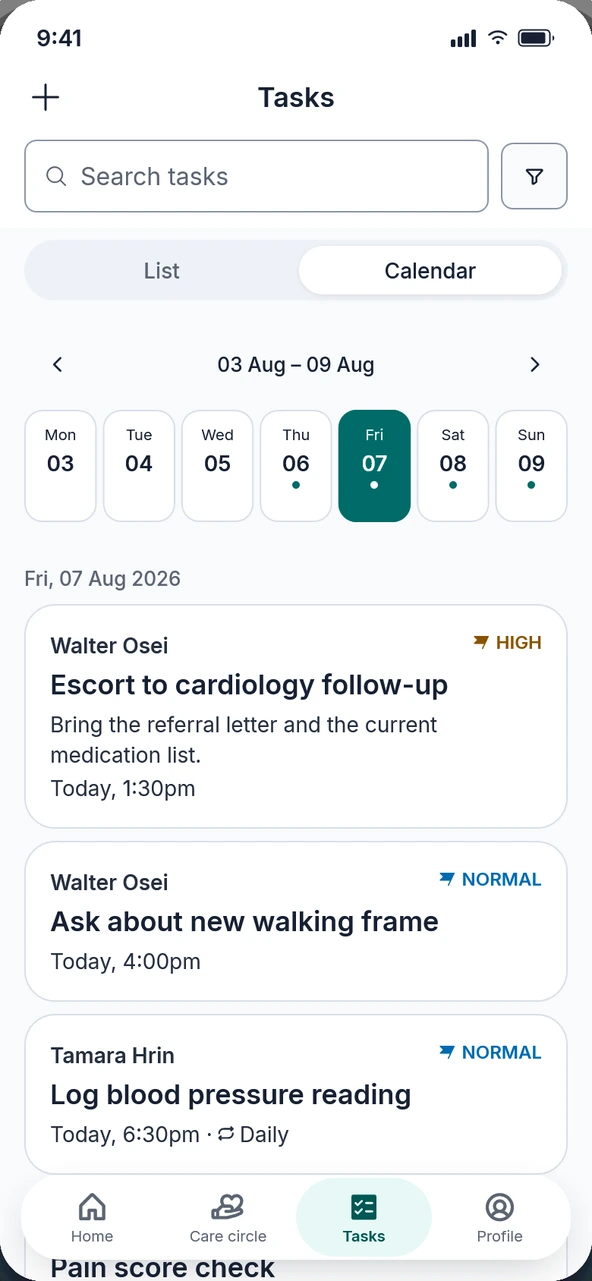
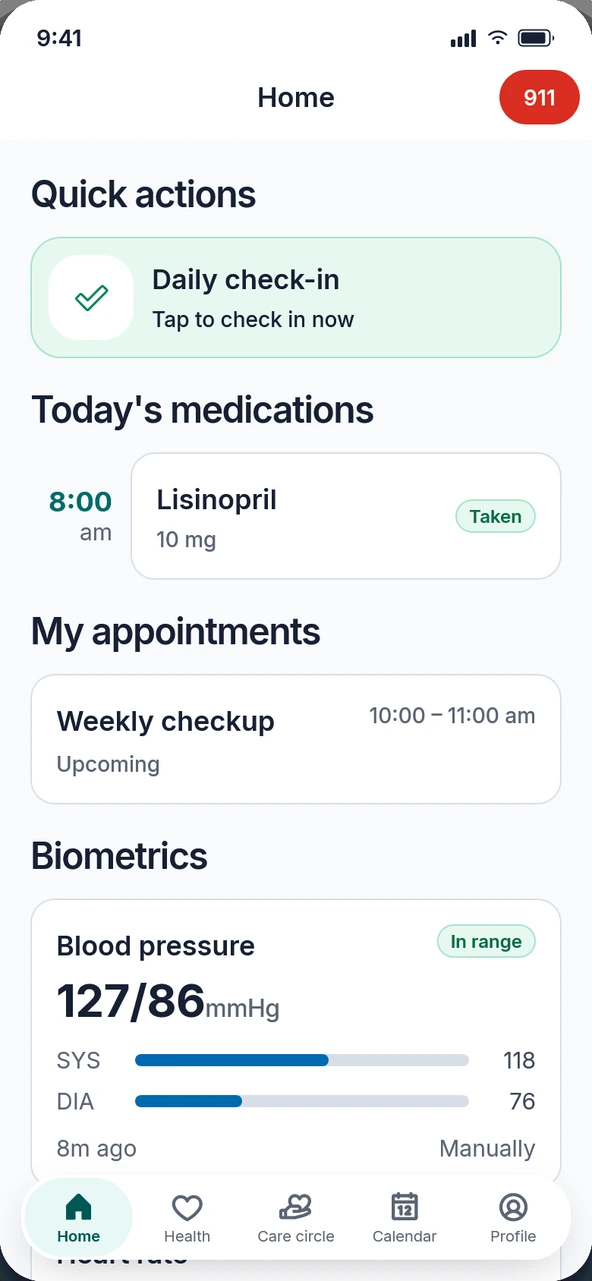
The same week, the same medications, the same notes — shown differently to the person living it and the person helping. Take a look from either side.
Every appointment, every visit, every medication, and what is still outstanding with a name against it. Your brother sees the same list you do. Medications are checked for interactions and against their allergies as they go in.
Care notes from whoever was last in the house — and a summary of them when there are more than you want to read. Anything the summary wrote is marked as written by AI.
It asks how you are doing, too, every so often. You are the other person this has to work for.
Their screen opens on something they do: the check-in, today’s medications, what is on this afternoon. Not a readout about them.
They choose who is in the circle and what each of them can see, and they can call any of them from the same screen. Help is one button, and it is on every screen they open.
A clinician is on the same screen as everybody else. They do not download anything or find a link in an email to see one.
Switch the screen below:
Will this actually fit what we already have?
They’re really not good with technology.
To answer a call they press one thing. They never do the setting up — you do that, or we do, and everything with settings in it lives on your phone. If they try it and do not want it, that is a real answer, and better heard now than in two years.
Is this one more thing for me to manage?
One place instead of a calendar, a notes app, a group text and four phone calls a week. An appointment goes in once and everybody has it, and whoever was holding all of it in their head stops being the only copy.
What about the biometric devices we already own?
If their blood pressure cuff, scale or glucose meter writes to Apple Health or Google Health Connect — and most consumer devices do — the readings come straight in. Fitbit, Dexcom and others are coming.
Their care provider already has its own system.
That is fine, and it stays. The problem worth solving is the other one: the hospital portal, the specialist’s, the pharmacy’s, the lab’s — five logins with near-identical names, and only whoever set them up knows which is which. VivaLynx keeps them in one secured place, each labeled in your own words, reachable by anyone in the circle. Separately, when a provider runs on VivaLynx itself, their visit notes are already where you are looking.
is the national median cost of one month of assisted living.
Six years of VivaLynx costs less than one month of the alternative.
Be first in when it opens
VivaLynx opens to families shortly. Leave your email and we will send the link the day it does.
Two weeks free, no card to join the list.
Would rather talk to someone first? Get in touch.
We handle what you send here the way our Privacy Policy describes.